
WELCOME TO FORMAL FEELING WORKSHOP!
Dear Poet,
Welcome! I’m delighted that you have registered for a Formal Feeling Workshop. Each session begins with any poems ready for workshopping in the Meter of the Month, followed by poems in other meters and forms. So you are always free to explore any direction your Muse is calling you to go. We will all be with you wherever your Muse takes you, because formal poemcraft involves the same skills and strategies whether on the level of the overall pattern, stanza, line, or metrical foot.
Because meters are the most exacting and sublime level of poetic structure–and the one with which most poets are least familiar, we prioritize a cycle of 9 different meters as we move through the 9 sessions of the workshop each year. Below you’ll find resources and readings for meter in general, as well as some for this month’s meter only. Our meeting will be self-contained, and all these resources are optional.
Please note the link to our meeting-place in my private “Matrix.” You can save it below and you should also have it via an email. But you will not be receiving any link from Zoom about the meeting! So please keep this link safe by bookmarking it, etc.
I’m very excited to gather with you soon, among the magic of meters & forms!
Yours in love and meter,


Annie
RESOURCES FOR FORMAl FeELING WORKSHOP: CADENCES
Welcome to the Journey of Meters
Dear Poet,
Each gathering of Formal Feeling Workshop will be self-contained, and no preparation is necessary.
However, if you are ready to know more, in these sections you will find general background materials on metrical diversity, scansion, and other concepts underlying meters in general, as well as specific thoughts and guidelines for this month’s meter.
Yours in love, magic, & meters!
Annie
Principles of Scansion, & The 3-Step Scansion Method

Meters are the patterns made by the repeating sounds of words shaped into predictable rhythms. In every culture across the world, meters are honored ceremonially for their ability to change energy, help us learn and remember, cast spells, heal hearts, souls, and bodies, and guide us into sacred consciousness and timeless time.
In each language, meters’ patterns are created by shaping abstract, meaningless patterns out of sound aspects that carry core meaning within that language. Meters in English, for example, rely on the distinction between stressed and unstressed syllables; meters in Chinese rely on differences of pitch,
Any meter, in its essential nature, expresses the mystery where right and left brain, music and thought, unconscious and conscious, touch, Each meter is an ambassador bearing news of the inmost consciousness below the primal depth of our experience of language’s meaningfulness, that fulcrum of mystery on which the weight of our humanity rests.
SCANSION: THE 3-STEP METHOD
The scansion of poetry (recognizing and marking its metrical patterns) is not only a deep sensual pleasure, but also a sacred art. Scansion is (along with dancing) one of the most attentive and reverent ways with which to open ourselves to the magical energy patterns that weave throughout poetry. It can also reveal hidden dimensions to the words we speak in the most meaningful moments of daily life.
Until the advent of free verse about a hundred years ago, poetic rhythm was so familiar in our bodies that scansion may not have been necessary. But now, it’s a central tool for those of us who are serious about reclaiming the power of rhythmic language in our current world. Scansion can be a first step to navigating our way back into the body familiarity that guides much of the wisdom of oral-based, earth-centered societies. We will spend plenty of time on scansion in Formal Feeling Workshop. Here is a preliminary guide to the 3-step scansion method we will use.
WHY THE THREE-STEP METHOD?
This method is the best method I know because it does the best job of reminding us to feel meters in our body and in our inner or outer ear. It supports us to avoid the biggest mistake in scansion, which is thinking. Instead, it forestalls the mind’s habit of imposing an expected pattern, forcing us to stay in our bodies and listen freshly for wands and cups each time we scan. I learned this method in 1978 from my teacher, Penelope Laurans of Yale University, who adapted it from a method taught by her husband, the poet and translator Robert Fitzgerald, in his long-running Versification workshop at Harvard. A video demonstration of the 3-step scansion method may be found on my Youtube channel.
THE 3 BASIC SCANSION TOOLS
/ WAND
Marked above a stressed syllable—one that is louder, longer, and/or higher pitched than those immediately adjacent to it.
u CUP
Marked above an unstressed syllable—one that is softer, shorter, and/or lower pitched than those immediately adjacent to it.
| EDGE
Marked between (not above) groups of syllables. It indicates a footbreak—a division between repeating rhythmic units (commonly called “feet”), that are built on the same basic pattern of wands and cups.
THE 3-STEP SCANSION METHOD
(I learned this from Penelope Laurans, who learned it from Robert Fitzgerald)
- Mark the wands
- Mark the cups
- Look for repeating patterns (“feet”) and mark the boundaries between them with edges
- Name the line.
EXAMPLE
The sentence “It’s evening, and I call your name” would be scanned this way:
STEP 1 Mark the wands
/ / / /
It’s evening, and I call your name.
(Note: “I” may feel like a stronger syllable than “and,” but if you SAY IT ALOUD (the first rule of scansion!) you will notice that “and” needs to be spoken more strongly than “I.” Imagine shouting it to someone across a room to feel the difference. (Note 1: On a deeper level, if you are wondering how a small word like “and” can sound strong enough for a wand, the answer is that stress is relative: we hear a stress’s power relative to what’s around it. Because of the strength of the verb “call,” the “I” gets softer by comparison, and the “and” ends up being stronger than the two syllables next to it. Note 2: If you are wondering, “but what if I want to emphasize it differently? What if I want to stress the “I” because it is I, and not another person, who is calling?,” the answer is yes, you can do that (it’s called “performative stress”), but a reader seeing it on the page would not know you were doing it unless you changed the meter to make it happen. If you’d like to learn more about this, you’ll find it discussed in my book A Poet’s Ear.)
STEP 2 Next, add the cups
u / u / u / u /
I see you and I call your name.
Usually, a cup goes over each unwanded sylllable.
STEP 3 Finally, listen for repeating patterns and mark the edges
u / | u / | u / | u /
I see you and I call your name.
Looking for patterns, you will notice repetition: cup-wand-cup-wand-cup-wand etc.. Add the edges between them. If you are using a pen and paper, it helps to extend the edge right down between or through the words as needed. An edge is not used at the end of a line of poetry, because the linebreak serves the same purpose. For more complex lines, such as the ones I sometimes scan on this blog and discuss in the podcast, a scansion needs to show the variations in the basic meter.
STEP 4 To finish, name the pattern
The line has four feet with a u/ pattern, so it is an iambic tetrameter.
HOW TO NAME LINES Name the pattern you have revealed by combining the type of foot and the number of feet. The most common types of feet are the anapest (cup-cup-wand), iamb (cup-wand), trochee (wand-cup), and dactyl (wand-cup-cup. 2 feet is dimeter, 3 is trimeter, 4 is tetrameter, 5 is pentameter, 6 is hexameter. So lines are named things like anapestic tetrameter, dactylic hexameter, iambic pentameter, trochaic trimeter, and so on.
If a line has a significant variation, it is best to add that in the name as well (if the sample line above went
/ u | u / | u / | u /
Looking at you, I call your name
you would name it an “iambic tetrameter with a trochee in the first foot.”
3 LESS COMMON SCANSION TOOLS
\ HALF- WAND
Optional mark to indicate a stress whose intensity falls between a wand and a cup. Can be useful in resolving conflicts and moving forward, and in acknowledging special rhythmic effects. Use sparingly.
(u) GHOST CUP
Used to indicate something at the beginning or end of a line that doesn’t fit the expected pattern: either a missing cup at the beginning or end of a line, or an extra cup at the beginning or end of a line.
Example:
/ u | / u | / u | / (u )
Tyger, tyger, burning bright
If two syllables are missing, use a double ghost cup (uu).
# REST
Used to indicate a missing cup— a pause— in the middle of a line, where a ghost cup would be hard to see among the scansion marks.
THAT’S IT!
Now you know all you need to follow any of my posts or podcasts that involve scansion and meter!
Also feel free to check out my books including the Poetry Witch Workbook How to Scan a Poem (for the most detailed discussion!)….Also, A Poet’s Craft (in in-depth tome addressing scansion among many other aspects of poetry)., Calendars (which includes a free downloadable scansion guide ) and many other books. Videos about meter and scansion may be found on my youtube channel. Also check out my learning community, Meter Magic Spiral, and my list of upcoming classes, workshops, retreats and events here.
EN-RHYTHMING TECHNIQUE
En-rhythming is a term invented by one of my early students, a yoga teacher, to describe how I would coax a rhythm to enter my students’ bodies, bypassing their minds. I start by drumming and reciting poetry in the meter. after I while I stop reciting and continue drumming as they begin to write in the meter. Once they are in their metrical-writing groove, I taper off the drumming.
You can enprhythm on your own by any means that will introduce the meter into your body. You can drum, recite, listen to recordings of yourself reciting, stamp your feet, clap, dance, or simply meditate on a line or passage of poetry in your chosen meter.
Here are some tips:
— Choose a line or passage that sticks exactly to the base meter, without any variations from the basic pattern.
— Choose a line or passage you really love, so you will absorb it more easily.
— Plan to taper off the en-rhythming activity once you are in the groove, so you can focus entirely on your writing process. Once you are deeply familiar with a particular meter, you may find that you entrance yourself into the meter just by thinking of the meter itself.
— At first, use big pieces of paper (maybe from an artists’ sketchbook). You need pages that are wide enough to hold a full line of meter, so you won’t get confused about where the lines end.
— Stick with 3 or 4 feet of the meter to start (1-2 is too short to feel the groove, and 5-6 is too long to keep forward momentum)
— At first, write without stopping. Give yourself only one rule, to stick with the meter. Otherwise, give yourself complete permission to break all rules and defy all inhibitions. Allow yourself to be silly, to use cliches, to write complete nonsense, to repeat lines over and over, to feel pleasure, to be sentimental, to have fun.
Don’t change, fix, or revise anything. If you mess up, this may provide valuable information for you later (see “the metrical code” below). If you notice you’re off the meter, just adjust back into the meter as you move forward.
Enjoy!
If your ear gets confused, here are a few things you can do:
1. Take a break and come back to the line later.
2. Pretend you are shouting the lines to someone across the room, and the lines’ meter will
stand out more. nes’ meter eir meter w clear.
3. Ask someone else to say the line and tell you where they hear the stronger and weaker
syllables.
When you have a few lines you like, say them over to yourself and notice if you feel some tingly
feelings, maybe in your hands or in your heart area. That’s a sure sign of a meter magic spell!
If you want to take it a step further, here are five basic patterns of meter magic you can use and
their special magical qualities:
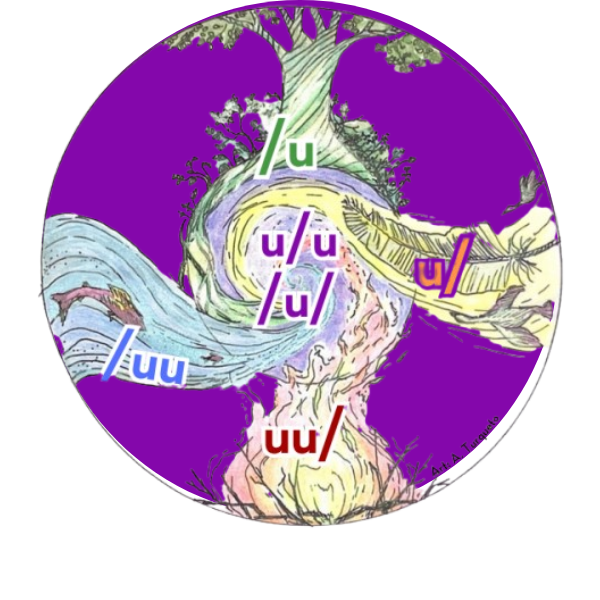
u u / Anapest: Meter of Fire and Passion
u / Iamb: Meter of Air and Clarity
/ u Trochee: meter of Earth and Strength
/ u u Dactyl: Meter of Water and Love
u / u Amphibrach: Meter of Matrix and Magic
Enjoy!
More Optional Background
What is a Spell? (coming soon)
Underlying all of meter’s aspects is openness to channeling energies larger than ourselves. Before the class, I invite you to practice staying open to yourself, kind to yourself, and curious about yourself. This will help open the way for the meters.
Yours in the Magic,
Annie
Suggested Further Reading on Meters
BOOKS
Baker, David, ed. Meter in English: A Critical Engagement. U. of Arkansas Press, 1997.
Corn, Alfred. The Poem’s Heartbeat, Copper Canyon, 1998.
Finch, Annie. How to Scan a Poem. Poetry Witch Press, 2023
—, A Poet’s Ear: A Handbook of Meter and Form University of Michigan Press, 2013 (or A Poet’s Craft—the material on meter is the same in both books).
—, The Ghost of Meter. University of Michigan Press, 1997.
— ,(Ed.) Measure for Measure: An Anthology of Poetic Meters. Random House, 2013
— ,Calendars (Readers Guide with scansions & discussion).. Tupelo Press, 2003
— (Ed.), A Formal Feeling Comes: Poems in Form by Contemporary Women. Wordtech, 1997 (rpt)
— ,The Body of Poetry: Essays on Women, Form, and the Poetic Self. Michigan, 2010.
Fry, Paul, The Ode Less Traveled. Hutchinson, 2005.
Gross, Harvey, The Structure of Verse. Ecco Press, 1979.
Steele, Timothy. All the Fun’s in How You Say a Thing.Ohio University Press, 1999
Thompson, John. The Founding of English Metre. Rutledge, 1961.
Oliver, Mary. Rules for the Dance, Houghton Mifflin, 1998.
ESSAYS
“What, Exactly, is Poetry?”
https://anniefinch.com/books-for-poets/what-is-poetry/
“Diversity, Constraint, and the Resurgence of Poetic Form”
https://anniefinch.com/diversity-constraint-and-the-resurgence-of-poetic-form/
WEBSITES & MAILING LIST
Princeton Prosody Archive: prosody.princeton.edu
Poetess Priestess Substack: anniefinch.substack.com
Annie Finch’s Five Directions Newsletter, anniefinch.com/subscribe
Spiral of Meters, www.poetesspriestess.org
Eratosphere (Ablemuse): https://www.ablemuse.com/erato/
Practices, Hacks, Tips, & Warm-Ups
Warm-Ups
- What are some of your earliest metrical memories? These could be poems or songs that you heard, but they could also be rhythmical phrases that were spoken to you, repeatedly or perhaps only once. Sometimes these are traumatic phrases. Or they might be phrases, words, names, etc. whose rhythm caught your attention. Try writing a list of these, say them aloud, meditate on what they meant to you and what they mean to you now.
- Choose a poem that you love that you know is in meter. Read it aloud three times. Notice the difference between reading it the first, second, and third time.
- Choose a metrical memory or a poem whose meter is compelling to you. Mark the meter down however you like. Then make up at least 3 lines in the sexact ame meter as the original line. Doublecheck that every syllable matches. Read it aloud three times. Enjoy!
Hacks to Help Feel the Accent
Shout across the room method (from Jessica Piazza). If you have trouble hearing which syllable of a word is stressed, pretend you are shouting it to someone across the room.
Reverse exaggeration Whisper one syllable, and shout the other one. Then reverse them. Which sounds more natural? Be sure to whisper one so you will have space for a very perceptible difference.
Dancing the wands (from Angela Greenwood). Say the words and notice which syllables make your hands or body want to move and gesture.
Practices to Feel a Meter
#SpeakItThrice! This is my hashtag of choice. Speaking aloud is the key to every aspect of metered poetry: creating, scanning, absorbing, memorizing, enjoying. Say the words three times aloud if you can, whispered if you must, or, if speaking or whispering is not an option, simply invite them to resonate fully in real time (taking their sweet time for each and every syllable) three times inside your mind (no rushing). Then check in with your confusion. Is it still there? Has anything changed?
Follow the Pleasure. Meter is, primarly, pleasurable. Like sex, food, and dancing, it wouldn’t have lasted so long if it weren’t. So seek an approach that feels good to you and don’t hesitate to use it. Some people like to move physically, some make a grid with all the syllables on a chart, some open up with mood altering substances . . .
Use Touchstones Memorize a line by someone else or yourself that you are sure is obviously, blatantly, exactly in each of the meters you want to use, and repeat it whenever you get confused.
Scanning Tips
it’s fine to use a dictionary to find lexical stress, but . . .
Never forget that stress is relative!.
Use half-wands sparingly, but use when necessary.
When confused, it can be helpful to move to the end of the line and put edges in backwards.
Final Thought
Underlying all of meter’s aspects is openness to channeling energies larger than ourselves. Before the class, I invite you to practice staying open to yourself, kind to yourself, and curious about yourself. This will help open the way for the meters.
Yours in the Magic,
Annie
RESOURCes for CADENCES
Sample Poems in Cadences
Mary Meriam
DAFFODILS
Hold me, Earth, like a mother. Make your nature
heal me, dirt, with an orange sweet potato.
Slide my sorely inept red cells some iron
beans and berries, and feed my crooked fingers
milk of grief, if they need it. Cry like rainstorms,
sigh like gusts from the high, high distant mountains,
shape your clouds as they wash blue sky with darkness.
Isn’t night when I fall the most, without you?
Screams erupt from the forests close around me,
hawks of dizzy disease, their questions flog me.
Bloom me, daffodils, bloom me yellow vigor,
scare the winter away that makes me rigid,
tiny suns in the garden, gathered tight in
green and giving aromas, kind, enduring.
John Masefield
SEA FEVER
I must go down to the seas again, to the lonely sea and the sky,
And all I ask is a tall ship and a star to steer her by,
And the wheel’s kick and the wind’s song and the white sail’s shaking,
And a grey mist on the sea’s face, and a grey dawn breaking.
I must go down to the seas again, for the call of the running tide
Is a wild call and a clear call that may not be denied;
And all I ask is a windy day with the white clouds flying,
And the flung spray and the blown spume, and the sea-gulls crying.
I must go down to the seas again, to the vagrant gypsy life,
To the gull’s way and the whale’s way, where the wind’s like a whetted knife;
And all I ask is a merry yarn from a laughing fellow-rover,
And quiet sleep and a sweet dream when the long trick’s over.
Annie Finch
SAPPHICS FOR PATIENCE
Look there—something rests on your hand and even
lingers, though the wind all around is asking
it to leave you. Passing the windy passage,
you have been chosen.
Seed. Like dust or thistle it sits so lightly
that your hand while holding the trust of silk gets
gentle. Seed like hope has come, making stillness.
Wish, in the quiet.
If I stood there—stopped by a windy passage—
staring at my hand—which is always open—
hopeful, maybe, not to compel you, I’d wish
only for patience.
A Proposal for Cadences
Cadencss are a magnificenet metrical strategy that allows poets to generate hundreds of distinctive metrical patterns out of a limited number of metrical feet. In Sanskrit, for example, hundreds of different recognized, beloved metrical patterns are all based on only 8 ganas: 3-syllable feet whose patterns correspond exactly to the 3-syllable feet in English — dactyls, cretics, anapests, tribrachs, etc..
It’s as if Sanskrit poets, over their immensely long and fertile history, took the idea underlying the Sapphic stanza (one of very few recognized cadenes that has come down to us in English) and ran with it.
Let’s explore the possiblities of doing the same!
Copy Link to Access Our Meeting Place
https://matrix.anniefinch.com